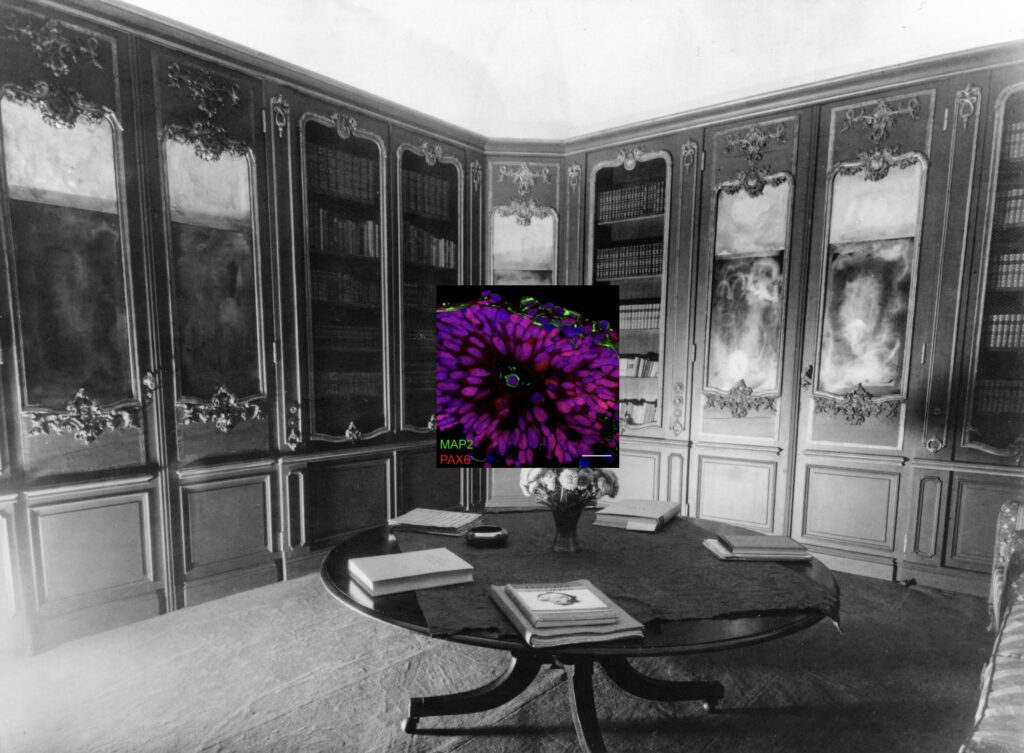
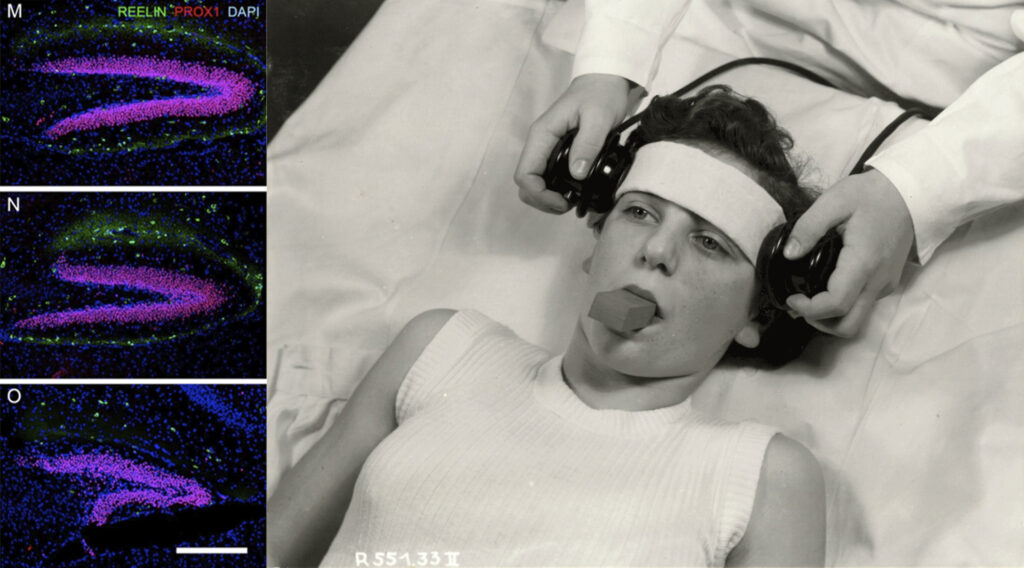
A Stigma Burnt on My Quivering Flesh is an ongoing investigation of the “deviant brain” as a historical construct and contemporary condition. Historically labelled as defective, unfit, or dangerous, individuals marked as cognitively “deviant” have been subjected to institutional violence, eugenic persecution, and coercive treatments.
Across the twentieth century, such practices emerged across a wide range of Western political systems: under Mussolini’s fascist regime in Italy, cognitive “abnormality” was, for instance, framed as a threat to national vitality; in the United States during the Jim Crow era, those labelled “feebleminded” were targeted through forced sterilisation and institutional confinement; and in Nazi Germany these ideas culminated in the systematic persecution and murder of people deemed cognitively unfit through programmes such as Aktion T4. Meanwhile, Nordic welfare states pursued their own forms of “social hygiene”, implementing sterilisation programmes directed at individuals categorised as cognitively unfit.
While these histories are often understood as belonging to the past, this project approaches them as forces that continue to shape the present. Contemporary demands to “mask” in everyday interactions, neuroscientific attempts to locate and treat cognitive difference in the brain, and the exclusion of neurodivergent individuals from normative regimes of productivity at the labour market all indicate how earlier classificatory logics persist in new, yet more subtle, forms. At the same time, echoes of eugenic language have re-emerged more explicitly in contemporary political rhetoric, for instance in the United States, where figures such as Robert F. Kennedy Jr. have recently described autism as an “epidemic”, thus reviving a vocabulary of contagion and defect that closely mirrors earlier discourses of biological threat. It is precisely within this temporal field – where past and present remain entangled – that A Stigma Burnt on My Quivering Flesh situates itself.